Wealth management’s approach to AI has a fragmentation problem.
Firms keep adding new AI tools. Advisors keep learning them. And everything ends up sitting side by side, disconnected from the workflows that actually matter.
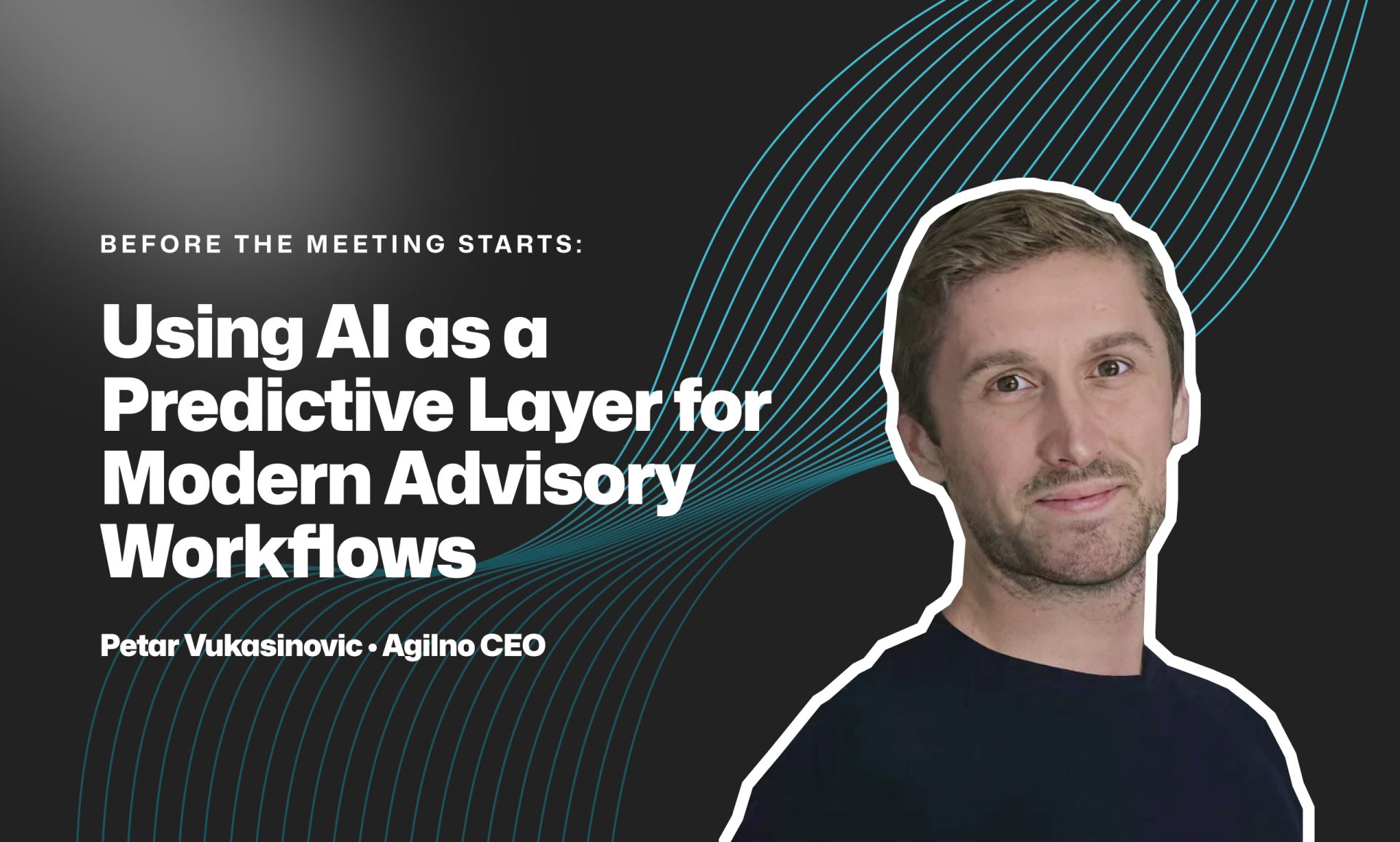
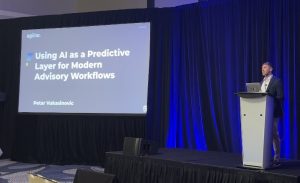
At this year’s AI University at the T3 Conference in New Orleans, Petar Vukasinovic made that gap explicit. In his session, Before the Meeting Starts: Using AI as a Predictive Layer for Modern Advisory Workflows, he showed through live demos what a connected AI harness layer actually looks like in practice.
AI is already in use. The problem is, it’s not working together.
Until recently, most firms have been incorporating AI through an assortment of disconnected point solutions. Different AI features solving isolated problems, but without being connected to the systems advisors use every day. CRM holds one part of the story, meeting transcripts and notes collecting some insights, portfolio tools another, documents and emails something else entirely. None of these systems truly work together, and none of them provide full context when it matters.
Because of that, advisors end up acting as the integration layer themselves. The insight isn’t in any one system. It’s in the connections between them. Preparing for meetings means going through multiple systems and summary documents and manually deciding what actions to take. Without this connective AI layer, advisors are still the ones stitching everything together and deciding what matters. And even when the insight is there, nothing actually happens with it.
From disconnected tools to a unified AI layer
This is where the idea of an AI harness comes in. Simply put: an AI harness sits across your existing tools and connects them. Petar showed a custom-built AI harness that sits across existing systems and connects them into a single layer. It works with the tools advisors already use, pulling in data from sources like CRM, documents, email, and calendar, and turning that into something usable inside the workflow.
What makes this different is how it operates. It doesn’t wait for prompts. It reacts to events. If a meeting is scheduled for tomorrow, the system prepares the relevant context. When a new document is uploaded, it processes and surfaces what matters. If a client hasn’t been contacted in months, it flags it and suggests next steps. It also applies logic, not just generation. Instead of producing raw AI output, it follows defined workflows and delivers structured results, like summaries, checklists, or recommendations that advisors can actually use.
The Next AI Shift in Wealth Management
What stood out at T3 this year is that the firms seeing the most value from AI aren’t the ones simply adding more tools. They’re the ones investing in a connected layer where data, systems, and workflows work together, and where that coordination actually reduces the burden on advisors.
That’s what an AI harness enables.
If you’re exploring what this could look like within your own workflows, we’re working with advisory teams to design and implement AI harness architectures tailored to how their practice actually operates.
Reach out: sara@agilno.com