
Bob Veres’ Insider’s Forum is where advisors, RIA leaders, and the people building their technology come together to talk candidly about where the profession is heading. This year the group gathered in Denver (September 16–18, 2026), and AI was the conversation in nearly every room. I joined the panel Technology, Including AI That Supports & Drives Growth, and one moment from that session captured where the industry stands right now.

Picture 1. The AI panel at Insider’s Forum 2026
One blunt question, and most hands went up for “more complicated”
Bob asked a room full of RIA advisors a simple question: is AI making your life easier, or more complicated?
Unsurprisingly, most hands went up for “more complicated.”
It’s the same answer we hear from RIAs every week. New AI tools keep arriving, each promising efficiency and each adding one more system to log into, check and maintain. The problem isn’t a lack of AI. It’s where AI is being applied. If you’d have raised your hand for “more complicated” too, this post is for you.
Why AI is adding work instead of removing it
Picture the day after an annual review. The note taker has the transcript. The CRM needs updating. The client wants to open a Roth IRA and roll over an old 401(k). The follow-up email isn’t written yet. Then the custodian sends the paperwork back, and by Thursday someone on your team is on hold with Schwab, trying to find out why the account still isn’t open.
Every tool in that chain does its job. The note taker records, the CRM stores, the custodian holds the assets. But none of them moves the work from one system to the next. That still falls to the advisor, the paraplanner or the client service team.
To me, that’s the hardest problem left, and it isn’t inside any one tool. It’s the human work required between them. Every new AI tool that flags a task without doing it adds one more thing to check.
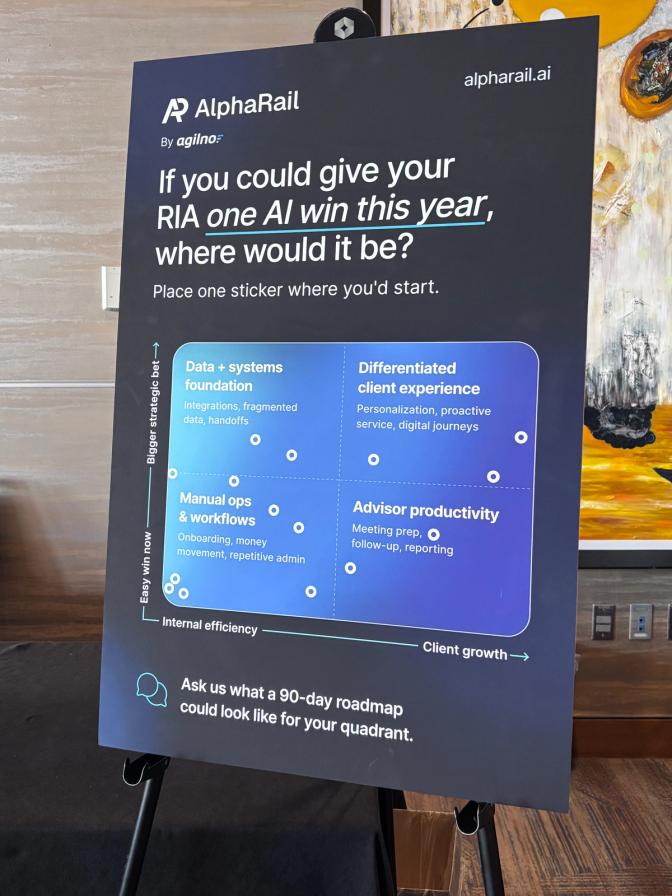
Picture 2. Advisors at Insider’s Forum 2026 marked where they’d want their first AI win
Five ways to make AI simplify your firm, not complicate it
Bob opened the panel by asking whether there’s a way into AI that doesn’t mean reinventing the wheel. From what we’ve seen in Agilno’s work with wealth management firms, banks and custodians, there is, and it comes down to five steps that I believe any firm can start on this quarter.
1. Start with a workflow you already know
No one understands your firm’s actual workflows better than your team does. That’s the starting point, not a new platform. Pick one workflow that happens every week, like post-meeting follow-up, new account opening or a rollover. Write down every step, which system it happens in, and who moves the information to the next one. Then mark where it stalls.
2. Look between your tools before buying new ones
In two years of conversations with RIAs, we haven’t had a single firm ask for more software. What they feel is FOMO: maybe there’s a tool out there that would replace eight of the 15 their team already uses.
You don’t need to deprecate tools, migrate data and start over. In our experience, many firms have a lot of wins secretly sitting in between the tools they already have. Connecting the CRM, custodian and planning software you already pay for is usually the fastest gain.
3. Decide where AI belongs, and where people stay in the loop
Not every step needs AI. If a process is deterministic, like a monthly billing routine, traditional automation does the job better and more reliably. AI belongs in steps that need context: drafting a follow-up, summarizing a meeting, pre-filling paperwork from client data. Decisions and anything client-facing stay with the advisor.
4. Ask for execution, not notifications
Most tools stop at the insight. They ping you with what needs doing, but it’s still on you to execute. The next step is AI that drafts what should happen, waits for the advisor’s approval, then carries out every step across your systems.
When you evaluate any AI tool, ask one question: does it do the work, or only tell you about it? If it only tells you, it adds to your list instead of taking work off it.
5. Match the model to the task
Surprise token bills often come from one habit: switching on the newest, most powerful model for every request. Software that lasts uses only what each task requires. A model-agnostic setup also lets you move to cheaper models as they’re released, without losing performance.
Where AlphaRail fits
Those five principles are what we built into AlphaRail, Agilno's AI operator for RIAs. It runs on top of your existing tech stack and executes workflows end to end, with the advisor approving each client-facing step. It uses traditional automation or AI depending on the task, and it's model-agnostic, so costs stay predictable.
Your next step
The fastest way to find out whether AI will simplify your firm is to see where your team’s time actually goes today. Agilno has spent 10 years building software for wealth management firms, banks and custodians, and every engagement starts with a technology audit that gives you:
- A map of where your team’s time goes between systems
- The quickest wins you can get with the tools you already have
- A roadmap for what’s worth automating, replacing or leaving alone
If any of this sounds frustratingly familiar, I’d be glad to talk through what you’re seeing at your firm. Book a technology audit with Agilno, or see how AlphaRail executes RIA workflows end to end.
